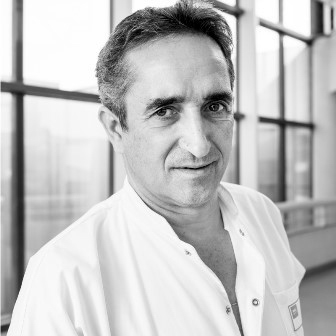
Here is my testimonial following my operation on August 29, 2017:
This testimonial is first and foremost a message of optimism for those who will undergo HIPEC surgery in the future, because three months after my operation, I have regained almost 100% of my physical abilities and my spirits are high.
As an athlete, I discovered this condition while running in May 2017, because I had a “kind of” side stitch when I started warming up. I wasn’t worried the first time, but it became a recurring problem, so I decided to see my GP. He diagnosed inflammation of the psoas muscle and prescribed an MRI scan, which was the right thing to do (rather than prescribing anti-inflammatory medication).
In early July 2017, during the MRI, the psoas muscle was in perfect condition, but a large black mass in the appendix area worried the radiologist. I was offered a CT scan right away. A digestive tract surgeon, contacted during the exam, gave me an appointment quickly. I had a feeling it wasn’t benign…
At the appointment, the diagnosis was not certain, so she planned exploratory surgery to confirm the disease. She operated on me at the end of July and the diagnosis came when I woke up (painfully!!!) from the operation: ruptured “appendiceal mucocele.” She then explained the next steps in my treatment, which involved a second operation called HIPEC, a name that was not at all reassuring! !
During the appointment at a center specializing in rare peritoneal tumors, the surgeon explained my condition, “peritoneal pseudomyxoma,” in detail, and the date of the operation was set for the end of August. The low grade was confirmed in August, which left me feeling relatively confident.
The operation lasted about 8 hours and involved the removal of a small part of the small intestine and colon, the gallbladder, a large part of the peritoneum, and finally, the diaphragm was “scraped” to remove the mucin that was attached to it.
The postoperative period: 1.5 days in resuscitation and 6 days in intensive care were difficult, but the medical staff (nurses, nursing assistants, interns, etc.) were truly extraordinary and helped me a lot to get through this period.
I was discharged after 12 days in hospital. The beginning of my recovery was difficult because I was unable to walk more than 50 meters without taking a break. In addition, eating was complicated because my stomach had atrophied and I had no appetite due to nausea: as a result, I lost a total of 12 kg, including 6 kg after I returned home.
To aid my physical recovery, I enlisted the help of a physical therapist who came to my home, as well as a nutritionist to help me eat enough to meet my energy needs. With this help, after three weeks of recovery, I regained my physical fitness and appetite, and my weight started to increase again. In total, my recovery lasted eight weeks before I returned to work.
Today, I am back to working full-time and have virtually no discomfort in terms of digestion and bowel movements.
Close friends and family also play a very important role. In my case, my wife was able to accompany me during my two-week hospital stay and was a constant source of support.
I hope that my story will help others suffering from this type of illness to stay positive, as this is also key to recovery.