Through a mother's eyes
Two years ago, in July, we received the first shocking news: my daughter, Lucie, had been diagnosed with a tumor measuring 26x15x13 cm in her abdomen…
The sky had suddenly turned dark! Before the operation scheduled for the following two weeks, no one wanted to say too much. Finally, the long-awaited but dreaded day of the operation in Reims arrived, where a team would remove a 7 kg tumor from you… We understood from their hints that the appearance of the tumor did not bode well…
Until then, you faced everything with courage and a smile.
The samples are sent for analysis, and we have to wait for three long weeks. At the end of this period, in September, we set off for the post-operative appointment. During this appointment, we learn that other samples are going to be sent to centers in Bordeaux and Lyon, so we have another three weeks of waiting ahead of us.
You are doing well, and the scar from your laparotomy is healing nicely.
Time seems to drag on forever, and my mind is racing with questions. What are we facing? Yes, we are considering the possibility of a serious illness, but we are staying focused and keeping our spirits up. We are sticking together!
It’s October now, the day the storm breaks. In five minutes, our world is turned upside down. The words are too hard to hear: high-grade peritoneal pseudomyxoma. We are told that it is a rare disease, one case in millions… As soon as the announcement is made, we have to choose where you will be treated and operated on, Paris or Lyon. We opt for Paris.
You leave the professor’s office in tears.
I find you outside, completely stunned, and so am I. I draw the strength to stand from the eyes of the person who shares my life. Now we have to tell your sister and your dad about the diagnosis. We are divorced, but we are going to have to throw all our strength into the battle, by your side! On the highway on the way home, the atmosphere is silent. Suddenly, you ask me, “So am I going to die, Mom?” I try to answer, “Yes, one day, like me, like everyone else on this planet…” Back home, after dropping you off, I collapse, overcome by a mixture of fear, helplessness, anger, and why you???
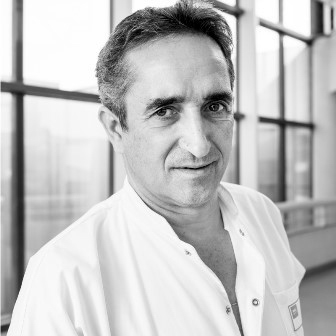
Our first appointment in Paris will introduce us to the person who will explain, listen, put things into words, reassure us, and allow us to see a small glimmer of light in all this turmoil! We immediately hit it off with the person who will operate on you. We trust her, and that will help us a lot!
A date is set, with the operation expected to last around 10 hours. We are given an explanation of HIPEC, or chemothermic ablation. That Tuesday will be the longest day of my life. You will go into surgery at around 8 a.m. and I won’t hear anything until after 11 p.m. I am sitting in a tiny waiting room, one meter from the door of the intensive care unit where you will eventually arrive!!!????? I bump into the head nurse from the emergency department, who finds me in tears. I’m finally going to get some news. She’s going to find out! They tell me you’ll be back around midnight, after 13 hours of surgery… During those 13 hours, our trusted lady will only have been away for 45 minutes… I finally see you around 1 a.m. You’re there, your eyes are closed, and I think you’re still asleep from the anesthesia, but when I take your hand and tell you I love you, you manage to whisper, “Me too.” I am shocked when I see you. The 30 liters of water injected to counter the potential ravages of thermal chemotherapy prevent you from even opening your eyes. I recognize you, but it’s not you. You are all swollen and puffy! You no longer have ovaries, a spleen, a gallbladder, or an omentum, but I know you’re going to fight!
In the days following the operation, you show incredible bravery, and I’m not the only one who thinks so and sees it. You astound the physical therapist when you take four times the number of steps she expected you to take. However, there is a catch: you are afraid to sleep. The fact that you couldn’t open your eyes when you came out of surgery prevents you from closing them peacefully! How impressive is the equipment around you: the syringes, the sensors, the devices that inject and aspirate, the bottles containing liquids of unlikely colors… On Saturday, four days after the operation, I notice that you are not talking, which is not like you. Your legs are cold. I report this to the ward and make my way home, because yes, staying close to you was essential. I was lucky enough to be able to use the family room in the intensive care unit. What a wonderful idea this place is. We already feel so helpless that it’s essential to at least be there. That same Saturday, around 11 p.m., I received a call telling me that you were going back into surgery for sepsis and peritonitis, so I set off again to be by your side. I saw you before the operation, and you came back with what you feared most: a stoma bag!
You took the blow hard, but remained positive as long as your dad or I were by your side.
You spent three weeks in intensive care, then we had to move to another floor, which meant moving all the stuffed animals that you still had with you despite being 22 years old.
You finally start eating again, then at the end of December you come home for a short stay, but you don’t feel well: your heart is beating fast, very fast, too fast! The doctor sends you to the emergency room, and at 5 p.m. the verdict is in: pulmonary embolism. You’re going to ask me again, “Am I going to die, Mom?” This time, I’ll answer, “No, not tonight, it’s not planned.” You’ll leave on a stretcher and I’ll be in the arms of the one who is always by my side. We’ll be lucky and it won’t hurt, the clot will be, as far as possible, well placed.
Throughout this period, I breathe as if I were holding my breath, and I take a few breaths when fate stops tormenting me. Except for your two questions, you bluff everyone. You care more about the effect of this illness on those who love you than about what you are going through.
It’s the stoma bag that, after being removed and closed, will play tricks on you. We’ll go back to Paris and the necessary steps will be taken to remove the intestine from the fresh stoma scar. It’s March.
March, springtime and the start of a new beginning that I’m trying to believe in with all my strength, and I dare to tell myself that the hardest part is finally over.
To finally be able to breathe deeply, to lift my head up and do something other than face head-on every hardship of your obstacle course! Being there as often as possible was all I could do: hold your hand, make you laugh, admire you, love you with all my heart, be proud of you and your sister, who embarked on military training with the Navy, which was probably her lifeline during this period.
Love, resilience, courage, and confidence are essential values in my opinion, but I don’t know if I demonstrated them enough during those moments. In fact, in the eye of the storm, it’s so difficult to know anything… We just know that we have to hold on and move forward no matter what.
This nightmarish episode in our lives has been powerful, powerful in terms of the people we’ve met and the invaluable support of my partner, family, friends, and colleagues, but what a lesson in life and perspective.
I would like to express my heartfelt thanks to the doctor and the team who worked so hard all those hours. What admirable and laborious work you do, so that you can still shine today, as you know so well how to do!